Neighbourhoods · 4 min read
Fushimi, Kyoto: Beyond the Torii Gates to the Sake District
How to visit Fushimi: Fushimi Inari Taisha's crowds and hike, plus the sake district several kilometres south. One name, two separate trips.
By Todokyoto · Updated October 28, 2026
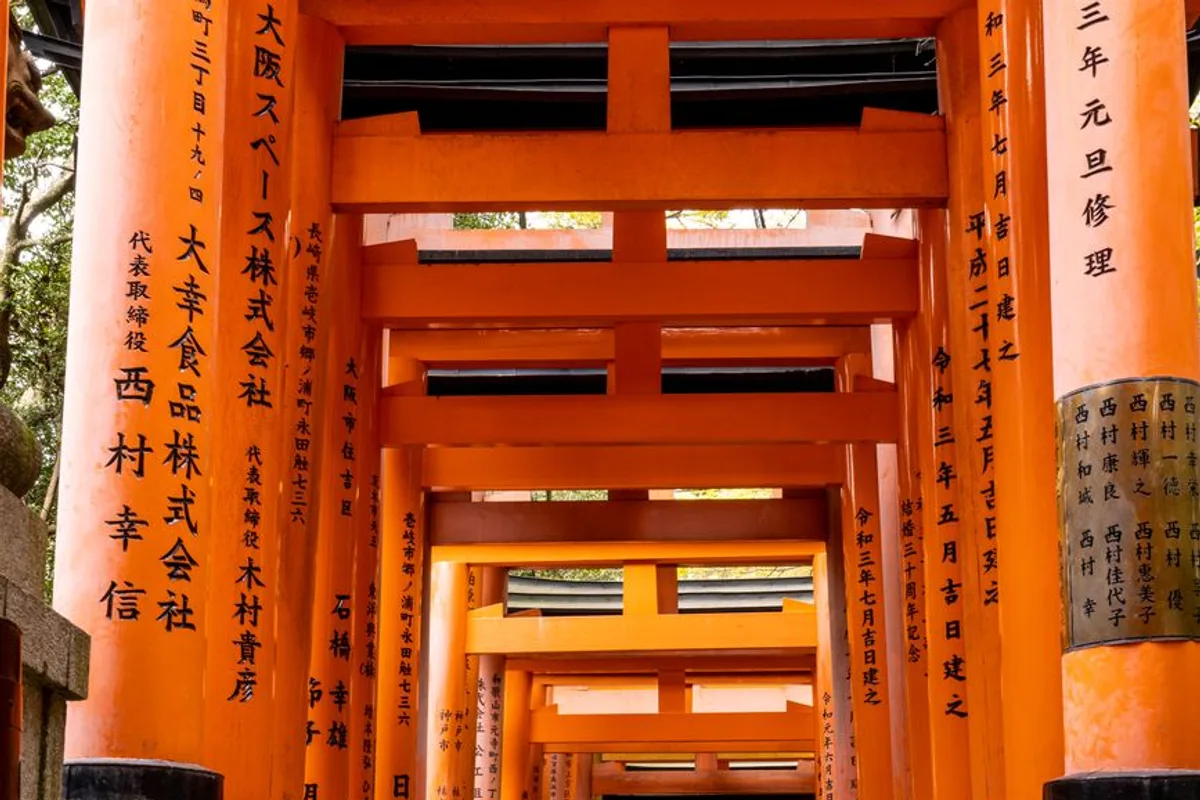
Fushimi is two destinations that happen to share a name. Most visitors mean Fushimi Inari Taisha, the shrine with the thousands of vermilion torii gates climbing Mount Inari. A few kilometres south, a separate Fushimi sake district sits along an old canal, one of Japan's three great sake-brewing regions. They use different train stations, and trying to see both in a single stop without knowing that is the easiest way to run out of time for one of them.
Fushimi Inari Taisha
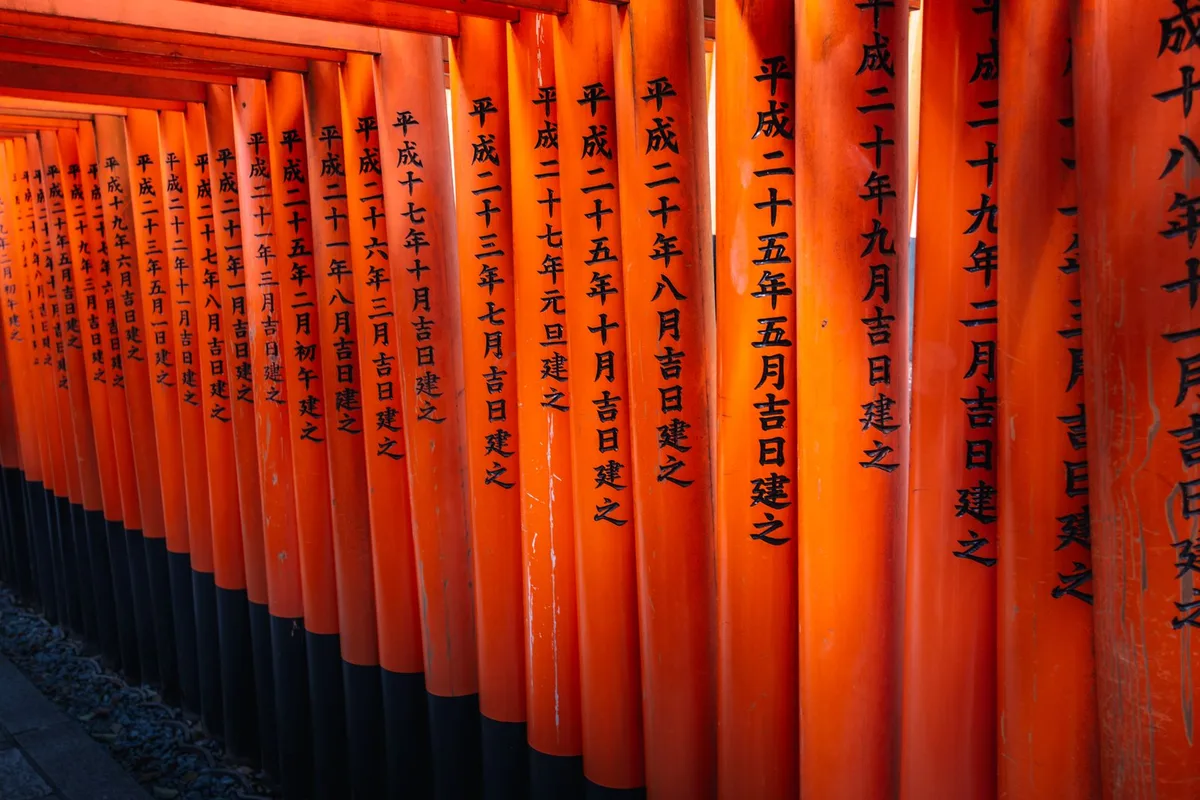
The shrine grounds are free and open 24 hours. The main draw, the Senbon Torii tunnel, is busiest from mid-morning onward; arriving before 7am or after dusk is the clearest way to see it without a crowd. Most visitors turn back after 20–30 minutes at the Yotsutsuji intersection, partway up the mountain, which is also where the foot traffic thins out sharply for anyone continuing further. The full loop to the summit and back takes 2–3 hours, entirely on steps, so wear shoes you're comfortable climbing in. JR Inari Station on the JR Nara Line sits right at the entrance to Fushimi Inari Taisha, and Fushimi-Inari Station on the Keihan Main Line is a short walk away.
Getting to the Sake District
The sake district is a different trip entirely. Chushojima Station, on the Keihan Main Line, is the station for it, about 4km south of the shrine and served by a different stop than Fushimi Inari. From Chushojima, the main sake museum and the historic canal are about a 5-minute walk. Fushimi-Momoyama Station (Keihan) and the nearby Momoyamagoryo-mae Station (Kintetsu) are a secondary option, roughly 8–10 minutes on foot from the same cluster. See Getting Around Kyoto for fares and passes.
Gekkeikan Okura Sake Museum
Gekkeikan Okura Sake Museum is the district's main visitor-facing brewery. Adult admission runs around ¥600 (reduced for ages 13 to 19, free for children 12 and under), and the fee includes three tastings and a small gift. The museum asks visitors to reserve online ahead of time rather than walking in. Reported hours run roughly 9:30am to 4:30pm with last entry around 4pm, though it's worth checking the museum's own site before you go; it's closed around New Year and Obon, plus occasional additional closures.
One of Japan's Three Great Sake Regions
Fushimi is grouped alongside Nada (Hyogo) and Saijo (Hiroshima) as one of Japan's three historic centres of sake production, a status tied to its water. The groundwater here is particularly low in iron, which otherwise dulls a sake's colour and flavour, and the resulting style is traditionally called onnazake ("female sake"), prized for being mellow and smooth. That's often contrasted with Nada's harder water, which produces a drier style locally called otokozake ("male sake"). The number of working breweries left in the district is reported differently depending on the source, commonly cited as around 20, down from a peak of roughly 350 recorded in the 15th century and 83 at the start of the Edo period. Fushimi's rise as a brewing centre followed its growth as a castle town and transport hub on the water routes connecting Kyoto to Osaka.
The Canal and the Jukkokubune Boat
A narrow canal, the Fushimi Horikawa, runs past white-walled sake warehouses that once moved barrels by water. A small sightseeing boat, the jukkokubune, still makes the roughly 50-minute round trip seasonally, departing near the sake museum and running at intervals through the day; the season generally runs from spring into early December, with a pause for part of August. Reservations are recommended and bookable online; confirm the current fare and schedule before planning around it, since both shift from year to year.
Teradaya Inn
Teradaya is the inn where the samurai Sakamoto Ryoma survived an assassination attempt in 1866, an episode known as the Teradaya Incident that became one of the better-known events of the Bakumatsu period leading up to the Meiji Restoration. It's open to visitors today, about a 5-minute walk from Chushojima Station, with Ryoma's room reportedly still showing sword marks from the attack. Admission is modest; confirm the current fee and hours locally, since reliable up-to-date figures weren't available at the time of writing.
Fushimi Momoyama Castle
Fushimi Momoyama Castle is a 1964 concrete reconstruction, not the original building, and its keep has been closed to the public since 2003 following the bankruptcy of an amusement park that once operated on the site. The surrounding park reopened in 2007 and is free to walk through, but don't plan on going inside the castle itself; nothing suggests that's changed.
How Long to Allow
Treat the shrine and the sake district as two separate outings rather than one. A couple of hours covers the shrine's lower section before the crowds build; a full loop to the summit takes half a day. The sake district, including the museum and a walk along the canal, fills another couple of hours on its own.
Practical Notes
- Fushimi Inari Taisha's hike is steps throughout; bring water in warmer months.
- Carry cash for the sake museum's shop and smaller breweries.
- Rubbish bins are scarce, as throughout Kyoto. Carry out what you bring in.
Build Your Itinerary
Build a day-by-day Kyoto itinerary filtered by pace, focus and neighbourhood, covering landmarks, museums, food and nightlife.